Print
  • Hold down Ctrl key and select the sections you want to print. If using a Mac, hold down the Cmd key.
  • Use Ctrl + A or on Mac, Cmd + A to select all sections (if you are using the Chrome browser).
  • Click "Apply" and the site will customise your print guide in the preview below.
  • Click the "Print" button and a print pop up should appear to print to your printer of choice.

Moving to Glasgow

Living in Glasgow as an expat

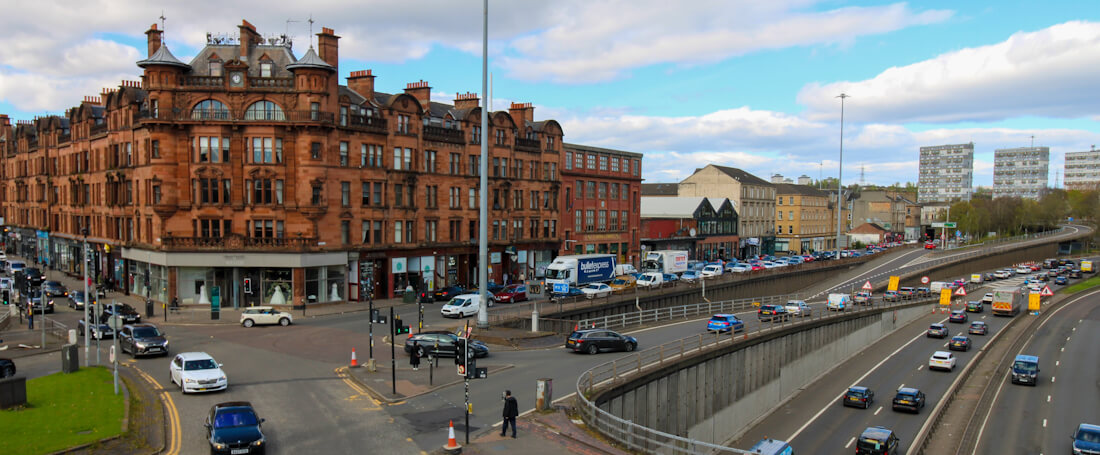
With beautiful Victorian architecture and lush natural surrounds, the city of Glasgow sits beside the River Clyde in Scotland's central lowlands, about an hour west of the capital city of Edinburgh. Expats moving to Glasgow will find themselves in a city that locals and foreigners alike are proud to call home.

Glasgow grew from its origins in shipping and trade to embrace its post-industrial role as Scotland's engineering and manufacturing stronghold. Subsequently, Glasgow became a centre of the Scottish Enlightenment movement, producing impressive art, music, and architecture. 

This evolution has produced a city of contrasts, carefully combining beauty and rugged functionality, resulting in an influx of newcomers keen to move to Glasgow and make the city their new home.

Working in Glasgow
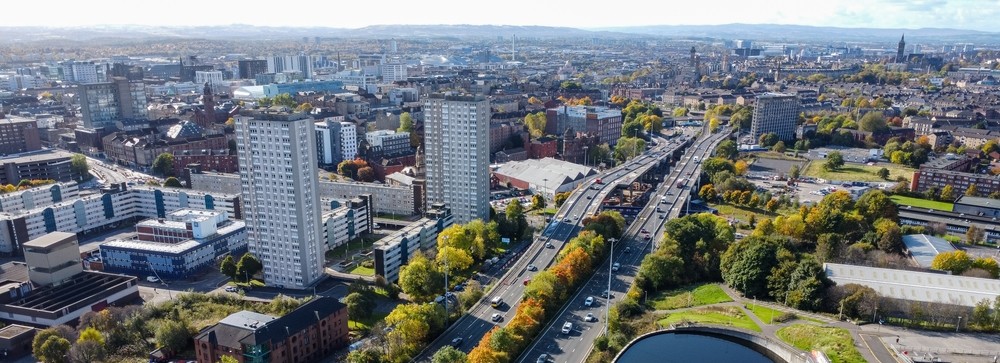
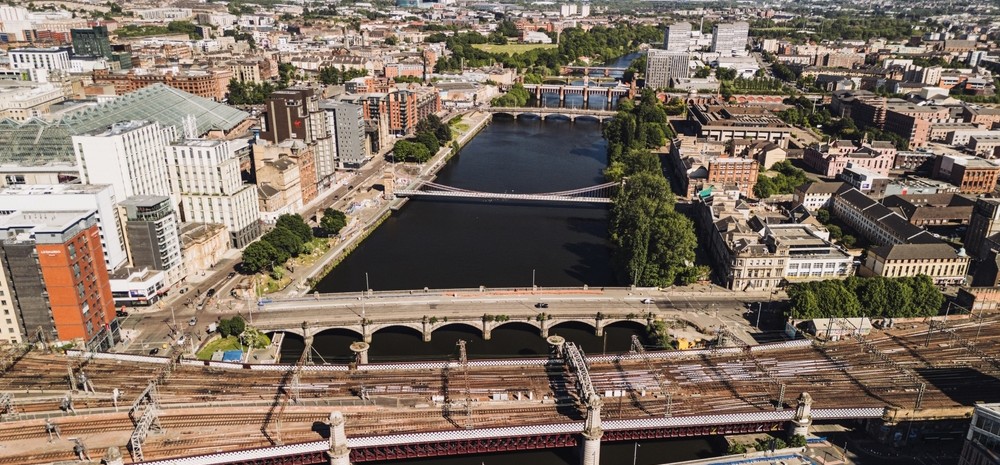
Glasgow cityscape

Many expats come to Glasgow to work in the city's financial and business services sector. Those who come over without a job already secured will soon discover that finding work in Glasgow can be a highly competitive process. Networking is key, and expats often find that going through an employment agency tends to yield the best results.

Finding a Job in Glasgow

Lifestyle in Glasgow

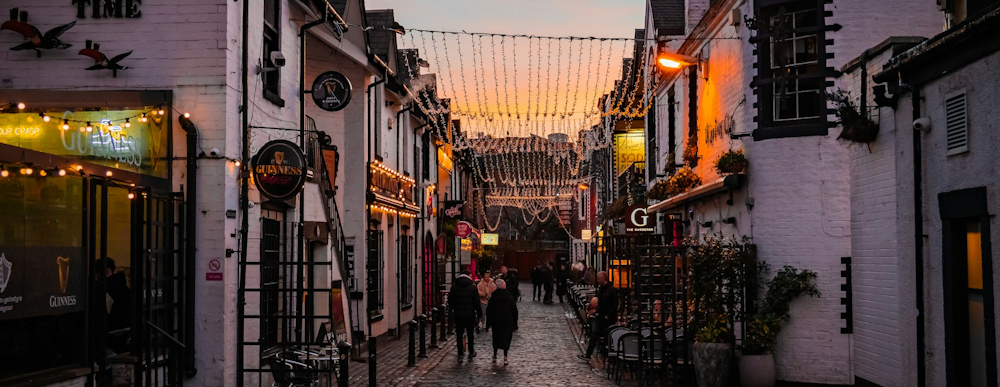
Pubs and cafes in Glasgow by Johnny Briggs via Unsplash

While Glasgow's climate is far from ideal, bundle yourself up and you'll still find plenty to do if you venture outside. From cosy pubs and restaurants to museums rich in culture and history, you'll be entertained even in the worst of weather. Make the most of rare sunny days by heading out to one of the many green spaces and gardens in the city. 

Good transport links make it easy to venture beyond Glasgow and explore the Scottish countryside. Camping and hiking are popular activities, while the picturesque and bustling capital Edinburgh is just an hour away by train.

Shopping, Attractions, and Outdoor Activities in Glasgow
Shopping, Attractions, and Outdoor Activities in Edinburgh

Finding accommodation in Glasgow
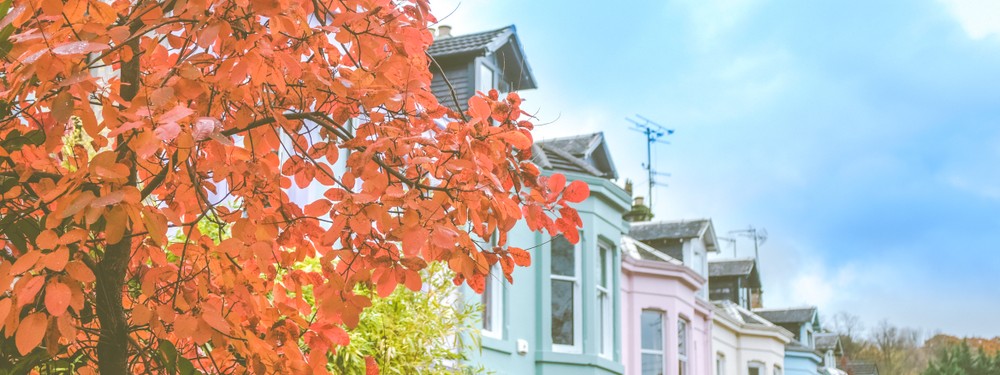
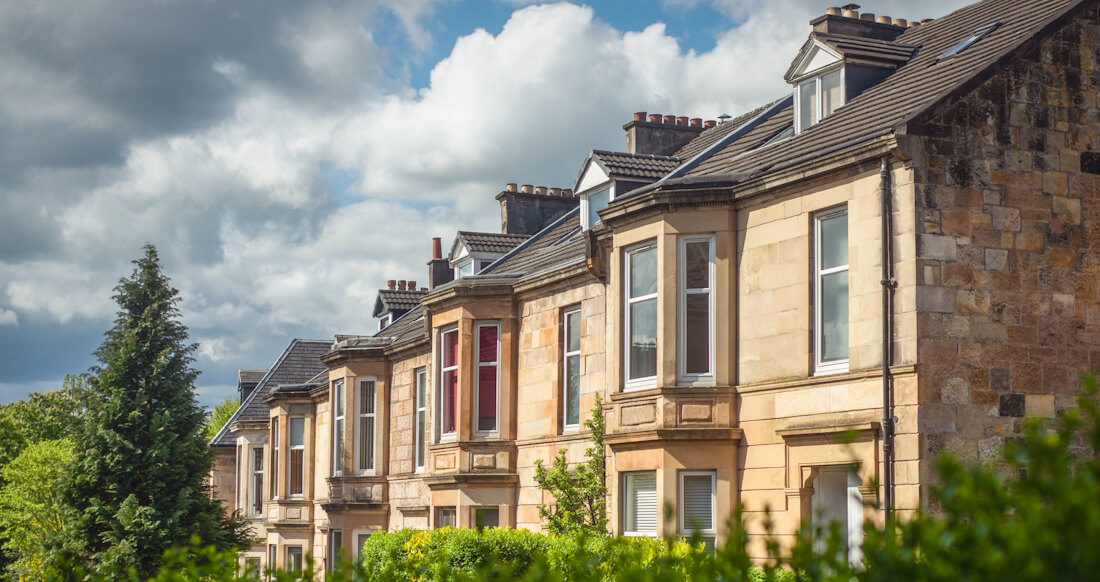
Row houses in Glasgow in autumn

Most of Glasgow's architecture is made up of old Victorian-era buildings, and this applies to much of the accommodation too. As a result, there are some real gems waiting to found, though they can come with the quirks of old buildings. New builds are available but can be a bit harder to find. Generally, accommodation here offers good value and buildings tend to be well insulated and fitted with fixtures like gas heating and double-glazed windows to ward off the cold of winter months.

Renting Accommodation in Glasgow

Cost of living in Glasgow

Glasgow offers a moderate cost of living compared to many other cities worldwide, making it an appealing option for those seeking affordability without sacrificing urban conveniences.

For those deciding between Glasgow and Edinburgh, the lower cost of living in Glasgow may be a deciding factor. Rental prices, in particular, tend to be more affordable than in the capital, making Glasgow a slightly more budget-friendly choice within the UK. However, both cities offer a high quality of life, and personal preferences will ultimately determine the best fit.

Living with children in Glasgow

Highland cows outside of Glasgow

Glasgow's high quality of life makes it a great place to raise a family. Healthcare is free or subsidised and of excellent quality, and the city is home to many good schools. There's plenty of fun to be had in and around the city, with a range of museums, shopping centres, and green spaces to explore. 

Glasgow also has all sorts of cute critters waiting to be spotted by sharp-eyed residents, from otters on riverbanks to foxes prowling around at night. You don't have to venture far out of the city to see Scotland's famous fluffy highland cows, as they can often be found in fields chomping away at grass.

Best Hospitals in Glasgow

Finding a school in Glasgow

While there aren't any foreign-curriculum schools in Glasgow, most expat parents are happy with the quality of education that government schools offer. In fact, Glasgow is home to some of Scotland's top-performing state schools. Catchment areas do apply, though, so expat parents looking to nab a seat for their children at one of the more competitive schools should keep this in mind when deciding what area to live in.

Expat parents after a globally minded education for their children might be interested in sending them to one of the handful of International Baccalaureate schools in Scotland. While there aren't any in Glasgow itself, there are three IB schools within a 30- to 60-minute commute.

Education and Schools in Glasgow

Getting around in Glasgow
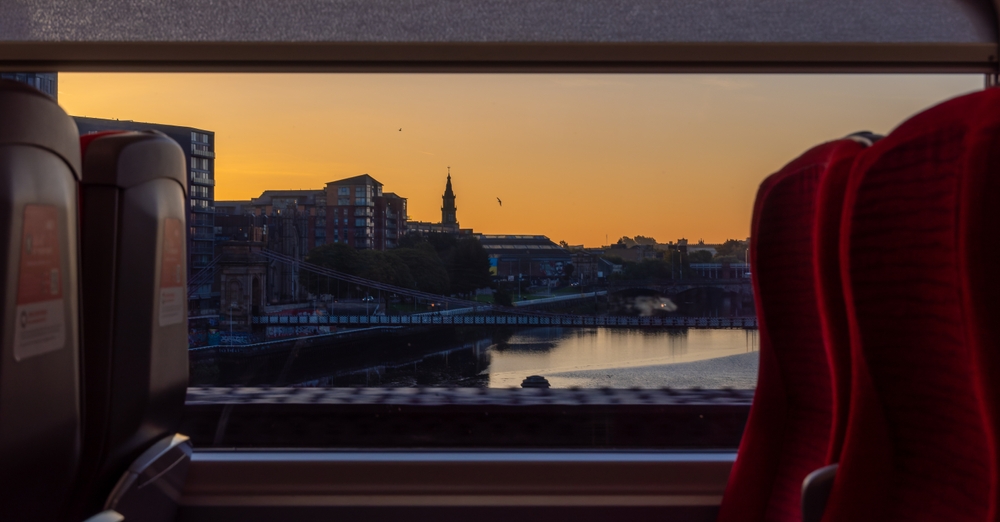
View of River Clyde from Glasgow train

Getting around in Glasgow is fairly easy with several options to choose from. Trains run from two major stations in the city centre, providing affordable travel options in Glasgow and throughout the UK. The bus system is just as efficient, with a reliable and comprehensive timetable servicing the city. Wet weather can sometimes cause disruptions, though, so it's best to check the schedule before heading out.

Transport and Driving in Glasgow

Climate in Glasgow

Glasgow's typically chilly and windy climate isn't one of its main selling points. Still, the bright flowers that pop up all over the city in springtime do make for a pretty sight, and some summer days can be fairly warm.

Climate Chart for Glasgow

Once settled, expats will encounter honest enthusiasm and a generous spirit among Glaswegians, finding many residents eager to chat. Come Friday evenings, expats heading down to the pub will find there's plenty of witty banter to be had, which is a great way to make friends with locals.

Moving to Glasgow may seem intimidating at first, but given a little time, expats will feel just as proud to live among the city's stunning Victorian architecture as born-and-bred Glaswegians.
Weather in Glasgow

The weather in Glasgow is not one of the city's especially strong points; it has the dubious honour of being named one of the UK's rainiest cities, with at least 170 days of rain a year.

Glasgow's oceanic climate brings cold, wet winters and cloudy, cool summers to the city. Rain isn't limited to any particular season, and the sun also often pops out for a few hours even in winter, despite the cold.

January is the coldest month of the year, with an average high of 43°F (6°C). Snow is infrequent and is mostly limited to a light sprinkle when it does occur. With climate change slowly warming temperatures, the "one good snow" Glasgow used to get every few years around Christmastime is becoming ever rarer. Snow's far less picturesque cousin, sleet, is more likely to make an appearance.

One thing expats will need to get used to in winter is the seemingly ever-present ice that coats pavements and roads. Local authorities regularly salt them to make them less slippery, but it's best to approach with caution.

On the upside, once you're through winter, you can look forward to spring in Glasgow as blooms pop up seemingly everywhere. Summer brings a few lovely, sunny days that feel very warm indeed compared to the icy winters. July, the warmest month, has an average high of 63°F (17°C).

The weather in Glasgow is known for being unpredictable. When Glaswegians joke that it could be sunny in the backyard while raining out front, it isn't far from the truth. Even if it doesn't look like rain is on the way, it's always best to keep a fold-up umbrella or raincoat handy, just in case the weather turns.


Pros and Cons of Moving to Glasgow

Every city has its ups and downs, and Glasgow is no exception. A picturesque city with historic buildings around every corner, Glasgow has much to offer, but day-to-day reality can be entirely different from what new arrivals may expect once the daily grind kicks in.

Here are a few pros and cons of moving to Glasgow.


Lifestyle in Glasgow

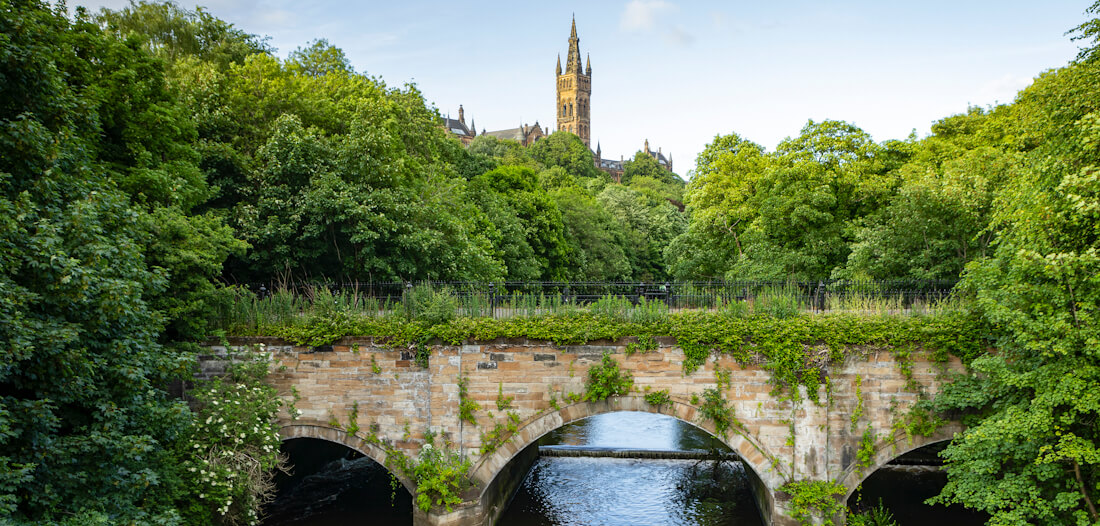
Bridge over Clyde River in Glasgow with university in background

+ PRO: Lots of green spaces

The word 'Glasgow' means 'dear green place' in Gaelic, and the city certainly lives up to its name. With public parks and gardens to be found all over, it's easy to find a quiet spot to escape the hustle and bustle.

+ PRO: Friendly locals

Glaswegians are famously friendly, and new arrivals can expect to be welcomed with open arms. Locals will generally be happy to help out with any information expats might need, and they enjoy getting to know others over a drink at the pub. If you have a well-developed sense of humour, you should find it pretty easy to settle into life in Glasgow.

Lifestyle in Glasgow


Weather in Glasgow

- CON: Grey, windy and rainy

Glasgow's weather is not one of the city's strong suits. In the winter, temperatures are in the single digits (Celsius) and sometimes below freezing. Snow doesn't occur every year and is typically light when it does, but sleet and rain are frequent unwelcome guests. Keep an umbrella handy if you're headed outdoors, but don't get too attached to any particular one, as they tend to get blown away or turned inside out by the wind.

Weather in Glasgow


Accommodation in Glasgow

Row of Glasgow tenements with street art on the side

+ PRO: Diverse range of areas

Glasgow's interesting and eclectic range of suburbs offers something to suit everyone. Whether expats are looking for a standalone home in a family-friendly neighbourhood or a high-end executive-style apartment in the centre of town, there are also areas well suited to artsy types, students, and singletons. 

+ PRO: Affordable housing

Accommodation in Glasgow is considered well priced, especially further out in the suburbs – though it's worth bearing in mind that public transport coverage in these areas gets correspondingly sparser. But even accommodation in the city centre is significantly cheaper than one would find in Edinburgh.

Renting accommodation in Glasgow


Healthcare in Glasgow

+ PRO: Access to the NHS

The National Health Service (NHS) is considered by many to be a major advantage of moving to the UK, and Scotland’s branch of the NHS is highly rated. Expats on the NHS can access fully funded healthcare, including appointments, prescriptions, and hospital visits.

- CON: Long waiting times

Throughout the UK, waiting times for appointments via the NHS can be long, and the same is true of Glasgow. Waiting times can be reduced by choosing private treatment, but this is a pricey option. We recommend that expats who plan to use private healthcare invest in comprehensive health insurance.

Healthcare in Glasgow


Education in Glasgow

Group of school children

+ PRO: Some International Baccalaureate schools

While there aren't any schools in Glasgow offering foreign curricula, a handful of private schools within travelling distance do have the option for children to study the globally respected International Baccalaureate (IB) curriculum, which culminates in the IB Diploma.

- CON: Catchment areas for public schools

As public schooling in Glasgow is based on catchment areas, children have priority admission to the school in their residential zone. Attending a school outside your catchment area is possible, but entry isn't guaranteed. For this reason, parents should research schools before moving and choose a neighbourhood with good schools nearby.

Education and Schools in Glasgow


Getting around in Glasgow

+ PRO: Multiple modes of public transport

Most areas in Glasgow are covered by some form of public transport. The city centre is especially well connected, and those living nearby can pick between above-ground trains, buses, and the subway.

- CON: Public transport can be inconvenient

Though it’s possible to get by without a car, most households in Scotland own at least one. Suburban areas don't have as many public transport options, and it's sometimes easier to just drive.

Glasgow’s temperamental weather can also make public transport an uncomfortable option, particularly when it’s time to leave the comfort of the heated train carriage and head back out into the freezing rain.

While delays on public transport aren't frequent, they do occur, and sometimes train passengers are redirected to buses if the delays are major.

Getting Around in Glasgow


Cost of living in Glasgow

+ PRO: One of the cheapest expat destinations in the UK

While Glasgow is more expensive than some of Scotland's smaller towns, it's still much cheaper than many other popular expat destinations in the UK, including Edinburgh and Aberdeen.

Working in Glasgow

Working in Glasgow, you'll have access to a thriving economy with a dynamic job market. But with so many qualified professionals in the city, you'll need to put your best foot forward as there's a lot of competition.

Glasgow is known for having an excellent work-life balance – one of the best in the UK – so while you'll be expected to work hard during office hours, your time off is your own.


Job market in Glasgow

Glasgow cityscape with river and bridges

In the past, the city's economy relied heavily on manufacturing, particularly the shipbuilding industry. Today, Glasgow's economy has successfully diversified, with services, technology, healthcare, education, and tourism among its strong sectors.

Common sources of employment in the services sector include retail work as well as more senior professional and managerial positions. The financial industry also has a large presence in Glasgow and employs a high percentage of the working population. The outlying areas of the city support a large industrial sector, and skilled workers are regularly in demand in construction and manufacturing. Other thriving industries include engineering, energy and green transition, creative professions, and life sciences.


Finding a job in Glasgow

Man using laptop to search for job opportunities

If you're arriving before securing employment, the best sources for job leads are networking and word of mouth. Employment agencies are also valuable tools and are eager to place qualified individuals in temporary and permanent positions. Sites such as LinkedIn are useful for making connections in the business world.

Bear in mind that if you're not a UK citizen, you'll need a visa and work permit to work in the UK.

Useful links


Work culture in Glasgow

Coworkers in the office

On the whole, Scots are a friendly bunch, and this applies in the workplace, too. Meetings are often peppered with small talk, humour, and pleasantries. Stick to safe, neutral topics during small talk and be mindful of local sensitivity points.

You might be invited for drinks at the pub after work. This is a great opportunity to get to know everyone outside of the office in a more casual setting.

Business Culture in the UK

Accommodation in Glasgow

Prospective residents of Glasgow will discover that the city has a huge variety of housing options available for both renting and purchasing. Most expats opt to rent rather than buy accommodation in Glasgow, at least initially. The good news is that Glasgow tends to be an ideal choice for those looking to make the most out of a relatively tight budget.


Areas and suburbs in Glasgow

Glasgow row houses

Glasgow is vast and filled with a variety of areas and suburbs, from the buzzing city centre to tree-lined neighbourhoods and everything in between.

Situated at the heart of Glasgow, Merchant City is a vibrant area with something for everyone. Here, you'll find shops, bars, and restaurants aplenty, not to mention art galleries, museums, and entertainment venues. With several train and subway stations in the area, getting around in Merchant City couldn't be easier.

Hillhead, home to the University of Glasgow, is a lively area in the West End. Great for students, this buzzing neighbourhood has independent boutiques and restaurants galore. It also has some of the city's loveliest green spaces, including Glasgow Botanic Gardens and Kelvingrove Park.

Slightly further afield is Shawlands, just south of the River Clyde. This quiet area is close to the 360-acre Pollok Country Park, a sprawling green space with plenty to see and do. A family-friendly neighbourhood, it also has some excellent schools, making it an ideal place to settle down.

Bearsdon is about 20 minutes from the city centre and is also favoured by families. Housing here is expensive but top quality, and local schools are highly rated. With Kilmardinny Loch Nature Reserve right on your doorstep, a breath of fresh air will never be far off, and quaint bakeries and cafés in the area offer respite from the Scottish rain.


Types of accommodation in Glasgow

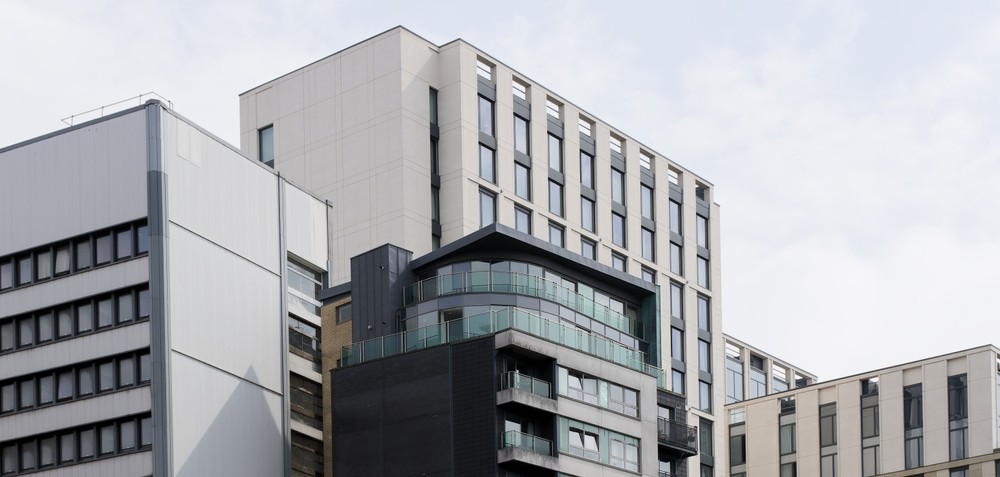
Modern flats in Glasgow

A range of property types can be found in Glasgow. Certain types of accommodation are often associated with particular districts and neighbourhoods.

Many areas close to the city centre contain tenements. Most were built in the late 1800s or early 1900s. These multi-storey dwellings have a shared stairway entrance with multiple units on each floor. They're usually three or four storeys high. Other typical tenement features include large rooms, high ceilings, and bay windows. 

More modern apartment buildings, known as flats, are interspersed throughout the city, and often make for an affordable option for newly arrived expats.

Outside the city centre, the suburbs tend to be more family oriented with more spacious housing and are typically populated by those who commute to work every day. Many of these housing estates have a cookie-cutter design serving a more functional role, while the older areas have character homes, which are typically larger and pricier.

Much of Glasgow's rental accommodation is offered fully furnished, which is a great option for those awaiting overseas shipments or starting over in their new location with no household belongings. If you prefer to bring or buy your own furniture, it's usually fairly easy to arrange for unfurnished accommodation. There are also several major furnishing stores in and around Glasgow, including IKEA.


Finding accommodation in Glasgow

Searching for accommodation in Glasgow

The best place to start looking for accommodation in Glasgow is online, by browsing the many property portals that cover the city. Social networking sites such as Facebook can also be useful for connecting with other expats who might have recommendations on areas or information about upcoming vacancies.

Expats may want to make use of the services of a letting agent, as these professionals have extensive knowledge of the various areas and types of housing available in Glasgow. They can offer advice and guidance throughout the process of finding a home. Landlords cover the agents' fees, so prospective tenants can use their services free of charge.

Useful links


Renting accommodation in Glasgow

Pile of wooden house-shaped cutouts

Making an application

Once you've found your ideal home, you'll need to submit an application, along with documents proving your identity, copies of bank statements or payslips, and your previous landlord's contact details for reference checks. In some cases, a guarantor may be required. Note that while expats may be asked to show their passport for identity verification, they are not required to show proof of a 'right to rent' in Scotland – this is a requirement in England only.

If a landlord wants to do a credit check on you or your guarantor, they must obtain written permission to conduct the check and do so at their own expense.

Deposits and fees

If you don't have a UK credit history, you may be asked to pay several months of rent up front. Six months is the maximum amount allowed, but landlords can sometimes be negotiated down to three months.

The typical deposit is the equivalent of one or two months' rent, with two months being the legal maximum. When you move out, the full amount must be returned, though fees can be deducted for damages beyond normal wear and tear, unpaid rent or utilities, or cleaning bills if the home is left dirty.

Leases

There's no fixed length for a private lease in Scotland, so it's indefinite or open ended until either the landlord or tenant ends the lease. Before signing, expats should ensure they fully understand the lease agreement, including its terms and conditions.

Terminating the lease

Glasgow's rental laws are favourable to the tenant. You only need to give 28 days' notice to your landlord if you wish to move out before the lease term is up.

Useful links


Utilities in Glasgow

Completing a utilities checklist

When budgeting, expats should ensure they're clear on what's included in the rental price and what isn't. Council tax and utilities, including electricity, gas, water, telephone, internet and cable, are usually provided at an additional cost to the tenant.

Electricity and gas

When moving into your new home, check the electricity and gas meters and take down the numbers displayed. In most cases, the previous tenant will have ended their contract with their electricity and gas provider, leaving you to choose your own. 

There's a wide range of electricity and gas providers to pick from in Glasgow. Different packages are available, so it's advisable to shop around to find a deal that suits your electricity usage habits. Some providers prioritise carbon-free electricity or have other environmentally friendly initiatives, such as buybacks for excess solar power. Scottish Power and Octopus are two widely used providers.

Solar panels are becoming more common throughout Scotland, as the government provides significant incentives for those who opt in, including grants to cover installation.

Council tax

Council tax is calculated annually and paid for in several payments spread throughout the year. The amount paid covers costs for aspects such as street lighting and road maintenance, as well as rubbish and recycling collection. 

Water and sewerage

Most of the drinking water in Glasgow comes from Loch Katrine in Stirling District. Scottish Water provides water and sewerage services, and costs for these are included in the council tax bills.

Rubbish and recycling

In Glasgow, you'll be provided with a set of bins for different types of waste, including recyclables. The bins are collected regularly according to a schedule set up by the local council.

For more details, see Setting up Household Utilities in the UK

Useful links

Healthcare in Glasgow

Expats will be able to access high-quality healthcare in Glasgow. The UK's healthcare system, the National Health Service (NHS), provides free or subsidised treatment for anyone legally resident in the UK.

There are two types of hospitals in the UK: public hospitals run by the NHS and private hospitals run by other entities. Both public and private hospitals have excellent facilities and care. Waiting times on the NHS can be long, so private hospitals are useful for skipping the queue. If you plan to use private healthcare, you should invest in a private health insurance policy to cover costs.

To use the NHS, you'll need to register with a GP practice in your area. You can find nearby practices by entering your postal code into the NHS Inform website. To see a specialist in the NHS, you must be referred by a GP. This isn't a requirement in the private system, however, and patients can book directly with a specialist if opting for private healthcare.

In the case of a medical emergency (where someone is seriously ill or injured), call an ambulance by dialling 999. For medical attention or advice on a non-life-threatening health issue, NHS 111 should be dialled instead. 

See below for a list of recommended public and private hospitals in Glasgow.


Public hospitals in Glasgow

Glasgow Royal Infirmary

Website: www.nhsggc.scot
Address: 84 Castle Street, Glasgow G4 0SF

New Victoria Hospital

Websitewww.nhsggc.scot
Address: 52 Grange Road, Glasgow G42 9LF

Queen Elizabeth University Hospital

Websitewww.nhsggc.scot
Address: 1345 Govan Road, Glasgow G51 4TF

New Stobhill Hospital

Websitewww.nhsggc.scot
Address: 133 Balornock Road, Glasgow G21 3UW


Private hospitals in Glasgow

Nuffield Health Glasgow

Website: www.nuffieldhealth.com
Address: 25 Beaconsfield Road, Glasgow G12 0PJ

Ross Hall Hospital

Websitewww.rosshallhealth.org.uk
Address: 221 Crookston Road, Glasgow G52 3NQ

Education and Schools in Glasgow

Expat parents have a range of options for schools and education in Glasgow. Public government-funded schools are free to attend, while private schools (known as independent schools) charge fees. Notably, Glasgow is home to some of Scotland's best-performing public schools, so parents should keep an open mind when deciding between public and private schooling. Education Scotland provides reports on both public and private schools, and is a helpful resource for investigating options.


State schools in Glasgow

School children in uniforms

Glasgow’s schools follow the Scottish Curriculum for Excellence, which divides schooling into two phases. The first phase is a compulsory Broad General Education, beginning at Nursery (age 3 or 4) and continuing through Primary (P1 to P7, age 5 to 11) and three years of Secondary (S1 to S3, age 12 to 15). At age 15, compulsory education is complete. The Senior Phase starts in S4 at age 16 and concludes with S6 at age 18.

The vast majority of children in Glasgow attend state-funded public schools. Some of these schools are particularly well regarded, topping the list of best-performing state schools in Scotland year after year. Quality does vary among government schools as a whole, so thorough research should be undertaken before making any final decisions.

Schools are automatically assigned according to catchment areas, so this is an important consideration when deciding where to live. It's possible to submit a placement request to Glasgow City Council for a school outside your catchment area, but placement isn't guaranteed.

Useful links


Independent schools in Glasgow

Glasgow has several private independent schools well worth considering, though private schools charge fees unlike state-sponsored schools. In some cases, there may be scholarship or bursary schemes available to assist with costs. These tend to be based either on need or on academic merit. While private schools adhere to the local curriculum, they have more freedom in teaching methods and may have better facilities.

It is always worth organising tours of the schools, ideally during a school day, to get a feel for the school’s approach and ethos. Some topics worth addressing include the length of the school day, extracurricular activities, class sizes, assessments, and possible summer school activities.

If you're searching for a school offering a foreign curriculum, you'll be out of luck in Glasgow. The only non-UK curriculum schools in Scotland are its five International Baccalaureate schools. Three of the five are within a 30- to 60-minute drive or train ride, while the other two IB schools are located further afield in St Andrews and Aberdeen. If you're willing to consider boarding options, there's a wide range of international schools in London.

Best International Schools in London

Useful links


Special educational needs in Glasgow

Child with a hearing aid

Special needs in education are addressed according to Glasgow City Council's 'Every Child is Included and Supported' policy. This policy operates through staged intervention levels, ranging from localised school-level intervention to multi-agency involvement. These stages ensure that support is consistent and appropriate to the child's needs.

Expat parents may find it useful to know that Glasgow Education Services also offers specialised support services for children who don't speak English as a first language. The English as an Additional Language (EAL) service is available to all children attending nursery, primary and secondary schools. The service assists children of all English levels, from those just learning English to those who have been speaking English for longer but require some extra support.

Useful links


Homeschooling in Glasgow

Given that there are no international schools in the city, homeschooling can be a good solution for expat parents living in Glasgow who want their child to continue with a foreign curriculum.

Parents must submit a notification to their local council if they wish to withdraw their child from public school and educate them at home. If the child is being withdrawn from an independent school or hasn't been enrolled in school yet, it isn't necessary to notify the council.

There aren't any restrictions regarding curriculum, and scheduling doesn't necessarily have to follow a fixed daily or termly timetable. However, parents are legally obligated to provide a suitable education according to the child's age, ability, and aptitude. Parents must prove this by complying with council investigation officers' checks, which usually occur once a year.

Useful links


Tutors in Glasgow

Tutors are widely available in Glasgow, both online and in person. Expat children can benefit from tutors in a number of ways, whether they're learning a new language, maintaining the family's mother tongue, or just getting some extra support as they get used to the Scottish curriculum. 

There are also tutors available for more general needs, such as developing study skills and essay-writing abilities. Hiring a tutor in the run-up to major exams can also help ease the stress of studying.

Useful links

Lifestyle in Glasgow

Expats moving to Scotland's largest city will find that the lifestyle in Glasgow offers plenty of opportunities for shopping, entertainment and outdoor pursuits. Whether you're in the mood to shop up a storm in the city centre or looking to spend a moment alone in the great outdoors, Glasgow has something for everyone.


Shopping in Glasgow

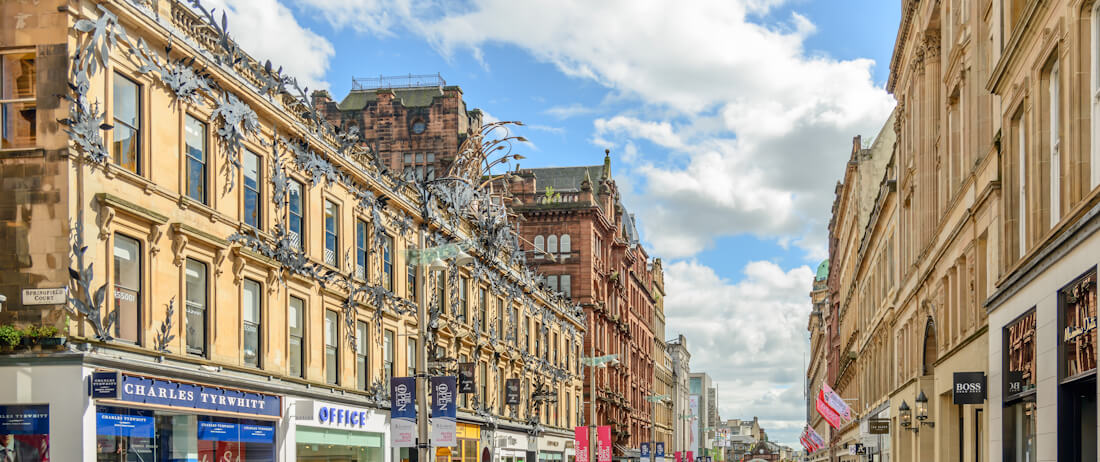
Buchanan Street, Glasgow

Buchanan Street in Glasgow's city centre is the heart of the Style Mile, as the city's main shopping district is affectionately known. Lined by high-end shops, tempting restaurants, and an array of street performers, there's plenty to enjoy in this part of town.

At the top of the street is Buchanan Galleries, a shopping mall housing more than 80 retailers. Further down is Princes Square, where the best of designer fashion can be found. For families, St Enoch Centre towards the bottom of the street has toy shops galore, including Scotland's flagship Henley's store.

Glasgow has plenty to offer shoppers beyond the Style Mile, too. Lovers of vintage and second-hand clothing will be in seventh heaven in Glasgow's West End, while other shopping centres such as the Glasgow Fort and the Forge Shopping Centre can be found dotted around the city.


Nightlife and entertainment in Glasgow

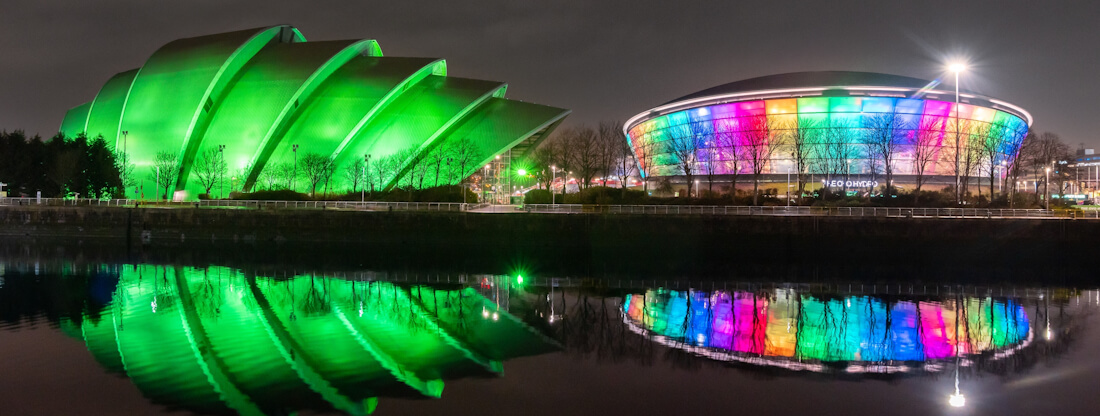
Scottish Events Centre on the River Clyde

Glasgow has the honour of being the UK's first UNESCO City of Music, and indeed, music lovers will be spoilt for choice here. 

Most major events in Glasgow happen at the Scottish Event Campus (SEC), located on the banks of the River Clyde. Here, you can find the OVO Hydro, Glasgow's premier arena with a capacity of over 14,000. For live music on a more intimate scale, check out King Tut's Wah Wah Hut – one of the city's smallest but most iconic live music venues. 

Glasgow has everything you need if you're looking for a night on the town, be it at a swish cocktail bar, an independent brewery or just a neighbourhood pub. Merchant City, close to Buchanan Street, is a hotspot for upmarket cocktail bars, while the West End has breweries and pubs aplenty.


Sports and outdoor activities in Glasgow

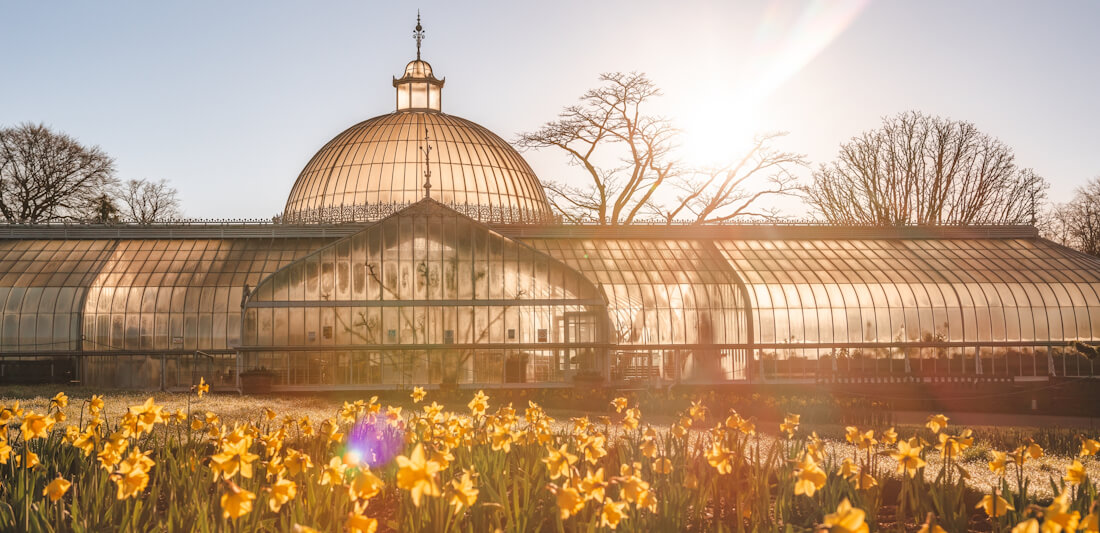
Greenhouse with daffodils at Glasgow Botanic Gardens

Despite Glasgow's typically cold and rainy climate, Glaswegians love to get out and about, whether they're supporting their favourite football team or enjoying the city's natural beauty. 

Sunny days are fairly rare in Glasgow, but the Botanic Gardens is the perfect place to spend them when they do come around. In spring, bright yellow daffodils and colourful tulips pop up all around the gardens, while squirrels can be seen scampering through the grounds and are quite friendly to visitors, especially those who come prepared with a few nuts.

Elsewhere in Glasgow, golf is a popular pursuit, as are water-based activities such as sailing, kayaking and swimming in Glasgow's rivers and lochs. There are also plentiful opportunities and trails for mountain biking and hiking.


See and do in Glasgow

Founded centuries ago, Glasgow is filled with historic sites and buildings, not to mention art galleries and museums galore – plenty to keep any culture-hungry expat busy. Check out some of our favourite spots below.

Heads with different expressions at Kelvingrove, Glasgow

Kelvingrove Art Gallery and Museum

One of Glasgow's most popular attractions, Kelvingrove is a must-see. Arriving at the museum, you'll be greeted by an entryway of heads, all expressing a range of strong emotions. This sets the tone, and as you venture further, you'll find more of the weird and wonderful on display, including an authentic WWII-era Spitfire plane, a huge collection of historical arms and armour, and an active hive of bees. There is also an incredible art collection that includes works by Dalí, Monet, Renoir, and Van Gogh.

Gallery of Modern Art

A visit to the Gallery of Modern Art (GoMA) is always something to write home about, and it's well worth spending some time contemplating the artworks on display. The museum features work by both local and international artists, and the gallery frequently runs special projects to address social issues.

Duke of Wellington Statue

In front of GoMA is a sight beloved among locals and foreigners alike: the statue of the Duke of Wellington. This statue's unusual claim to fame is the ever-present traffic cone perched jauntily on its head. The contrast of the dignified Duke and the brightly coloured plastic cone never fails to elicit a chuckle. The statue has become one of Glasgow's most iconic landmarks and is a monument to the city's cheeky sense of humour.

Duke of Wellington statue with traffic cones in Glasgow

Where to meet people and make friends in Glasgow

Trying to make friends in a new city is a plight many expats are all too familiar with. Luckily, Glaswegians are friendly and love to socialise, but it's not always easy to know where to begin meeting people. Here are a few local clubs to get started.

Parkrun Glasgow

Every Saturday, several 5km running/walking events known as parkruns take place in and around Glasgow. Joining in is a great way to get some fresh air, exercise, and mingle with like-minded people. After the run, participants sit down for a cup of coffee and a chat.

The Minerva Club

This community theatre group welcomes theatre lovers of all ages and levels of experience. Situated in the heart of the West End, the Minerva Club hosts numerous social events throughout the year, and the year's major production is staged each November.

United Glasgow Football Club

Expats who enjoy kicking a ball about are sure to have a great time meeting fellow footie fanatics at the United Glasgow Football Club. The club emphasises inclusivity for all nationalities, and many club members are expats themselves.

Getting Around in Glasgow

Thanks to a well-developed public transport system, getting around in Glasgow is pretty easy for the most part. The city's public transport system is comprehensive, convenient, and cost effective, and it's quite possible to get by on public transport alone. Those who aren't keen to face Glasgow's typically chilly, windy, and rainy weather may prefer to drive around in the comfort of their own car, though.


Public transport in Glasgow

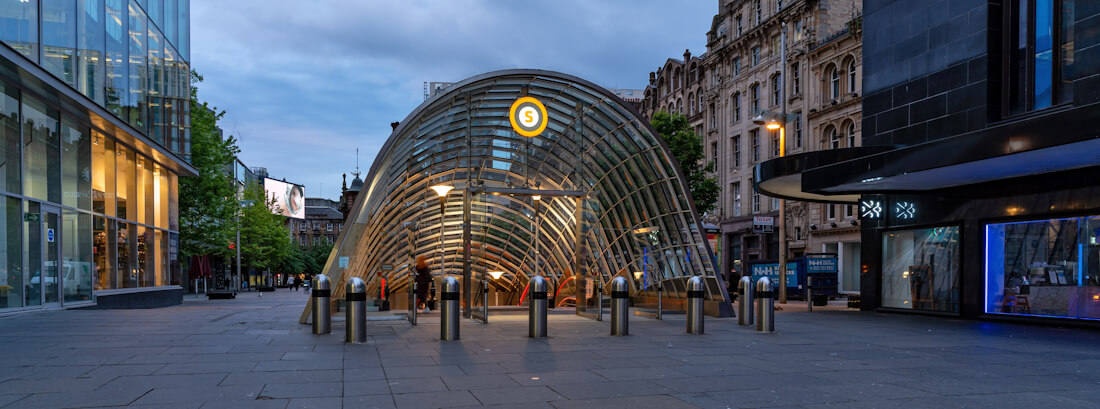
Glasgow subway entrance

Subway

Built in 1896, the Glasgow Subway is the world's third-oldest underground train system. It's a quick and easy way to get around the city, though its route is limited to the City Centre and West End areas of Glasgow. 

The subway runs along a circular route with one inner track and one outer track. Both tracks run simultaneously, so passengers can choose the train that reaches their desired destination first. Trains arrive every four minutes during peak times, and every eight minutes off-peak.

One drawback of the subway system is that it's quite compact, with only 15 stops. A full circuit takes just 24 minutes to complete.

Trains

Glasgow's network of above-ground trains traverses a much wider network than the subway, with ScotRail covering most local and regional routes. Other providers connect Glasgow with cities further afield in England and Wales.

The local train route covers much of suburban Glasgow and connects it to the inner-city areas. The frequency of trains depends on the route and time of day. Once in the centre of town, it's easy to hop onto the subway if you're looking to reach other parts of the city. 

Trains may experience delays, especially in bad weather. Before catching a train, be sure to check ScotRail's website or mobile app to confirm timetables and routes and check for current delays. 

Buses

Glasgow has an extensive bus system, with First Glasgow being the main provider in the city. Glasgow has over 80 bus routes covered by more than 600 buses. Night services are limited and mainly operate on weekends from the city centre. The bus system is especially useful for students as passengers under 22 can travel free.

The First Glasgow app is the easiest way to buy tickets, but tickets can also be bought at ticket kiosks around the city and on board the bus using exact change.

Useful links


Taxis in Glasgow

Taxis in Glasgow are fairly pricey, but are useful for getting to places that other public transport doesn't reach. They're also useful for getting home after a late night out, when the trains have stopped running.  Prices may be higher during peak hours or in the holiday season.

Classic black cabs (also known as hackney carriages) are run by Glasgow Taxis and can be found throughout the city. To catch one, you can hail it on the street or make a booking online, over the phone, or on the official Glasgow Taxis app. GlasGO Cars is another popular local option.

Ride-hailing applications such as Uber operate in Glasgow, and travellers can easily hail a cab using the relevant app on their phones. This is usually cheaper than catching a standard black cab.

Useful links


Driving in Glasgow

Glasgow roads and traffic

While owning a car in Glasgow is largely unnecessary, it can come in handy in rainy weather or for travelling longer distances.

It's worth noting that the City Centre is a designated Low Emission Zone (LEZ). Vehicles in this area are required to meet certain fuel efficiency standards or pay a penalty fee.

Weather safety

Be aware that driving in winter can be tricky in Glasgow, particularly on icy, rainy, or snowy days. It's best to avoid driving in these conditions, so only do so if really necessary. Winter tyres can help make driving a bit safer if you drive frequently in bad weather.

In icy conditions, authorities apply salt to roads and sidewalks to make them less slippery. Still, you'll need to give yourself ample room to brake as stopping distances can be up to 10 times the usual distance in these conditions. Black ice, which can look like water or be invisible on the road, is especially dangerous. If you find yourself skidding on ice, do not brake suddenly or try to change direction. Rather, gently steer into the skid until the car slows down.

Driver's licences

Expats from within the EU can drive in Scotland for as long as their licence is valid. Those from outside the EU can drive in Scotland on a valid licence from their home country for up to 12 months after arrival. After this, they'll need to apply for 


Walking and cycling in Glasgow

If using public transport, walking is an almost inescapable part of travelling in Glasgow. Glasgow is a large city, and despite numerous public transport options, a bit of walking is often necessary to get to where you want to go. Travellers should always be prepared for a bit of rain, though, so it's advisable to carry around a small umbrella or rain jacket in case of sudden showers.

Glasgow has around 186 miles (300 km) of cycle lanes, and sidewalks are generally safe for cycling. The number of cyclists in the city is increasing year by year. Although Glasgow isn't quite as cycle friendly as nearby Edinburgh, there's still some good cycling infrastructure available. The city has promised a further 34 miles (54 km) of walking and cycling routes by 2032 under the Connecting Glasgow programme.  

If you don't yet have your own set of wheels, try the citywide bike-hiring service, run by nextbike.

Useful links