
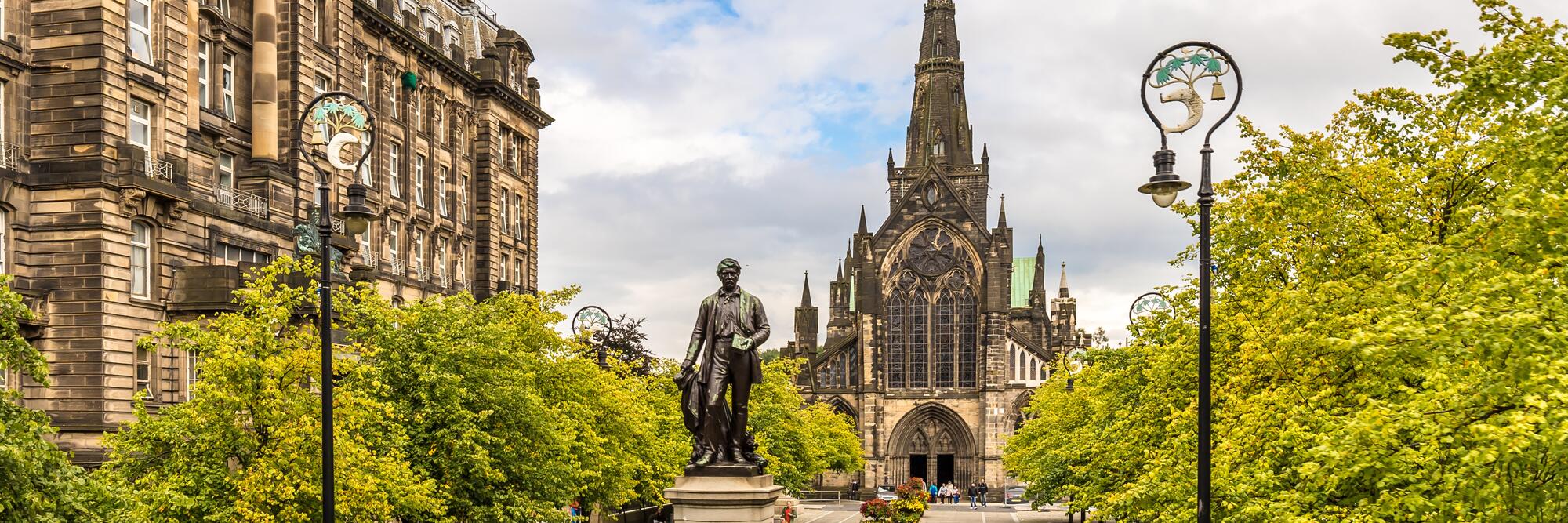
Thanks to a well-developed public transport system, getting around in Glasgow is pretty easy for the most part. The city's public transport system is comprehensive, convenient, and cost effective, and it's quite possible to get by on public transport alone. Those who aren't keen to face Glasgow's typically chilly, windy, and rainy weather may prefer to drive around in the comfort of their own car, though.
Public transport in Glasgow
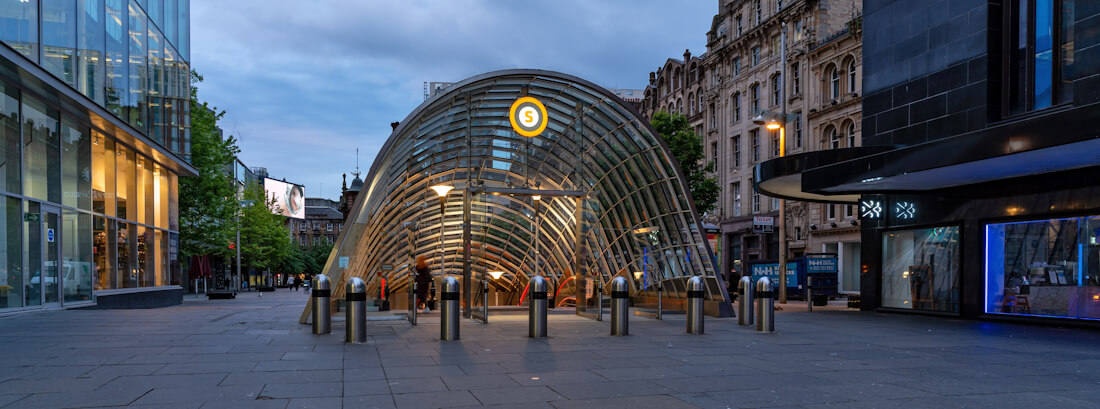
Subway
Built in 1896, the Glasgow Subway is the world's third-oldest underground train system. It's a quick and easy way to get around the city, though its route is limited to the City Centre and West End areas of Glasgow.
The subway runs along a circular route with one inner track and one outer track. Both tracks run simultaneously, so passengers can choose the train that reaches their desired destination first. Trains arrive every four minutes during peak times, and every eight minutes off-peak.
One drawback of the subway system is that it's quite compact, with only 15 stops. A full circuit takes just 24 minutes to complete.
Trains
Glasgow's network of above-ground trains traverses a much wider network than the subway, with ScotRail covering most local and regional routes. Other providers connect Glasgow with cities further afield in England and Wales.
The local train route covers much of suburban Glasgow and connects it to the inner-city areas. The frequency of trains depends on the route and time of day. Once in the centre of town, it's easy to hop onto the subway if you're looking to reach other parts of the city.
Trains may experience delays, especially in bad weather. Before catching a train, be sure to check ScotRail's website or mobile app to confirm timetables and routes and check for current delays.
Buses
Glasgow has an extensive bus system, with First Glasgow being the main provider in the city. Glasgow has over 80 bus routes covered by more than 600 buses. Night services are limited and mainly operate on weekends from the city centre. The bus system is especially useful for students as passengers under 22 can travel free.
The First Glasgow app is the easiest way to buy tickets, but they can also be bought at ticket kiosks around the city and on board the bus using exact change.
Useful links
Taxis in Glasgow
Taxis in Glasgow are fairly pricey, but are useful for getting to places that other public transport doesn't reach. They're also a good option for getting home after a late night out, when the trains have stopped running. Prices may be higher during peak hours or in the holiday season.
Classic black cabs (also known as hackney carriages) are run by Glasgow Taxis and can be found throughout the city. To catch one, you can hail it on the street or make a booking online, over the phone, or on the official Glasgow Taxis app. GlasGO Cars is another popular local option.
Ride-hailing applications such as Uber operate in Glasgow, and travellers can easily hail a cab using the relevant app on their phones. This is usually cheaper than catching a standard black cab.
Useful links
Driving in Glasgow
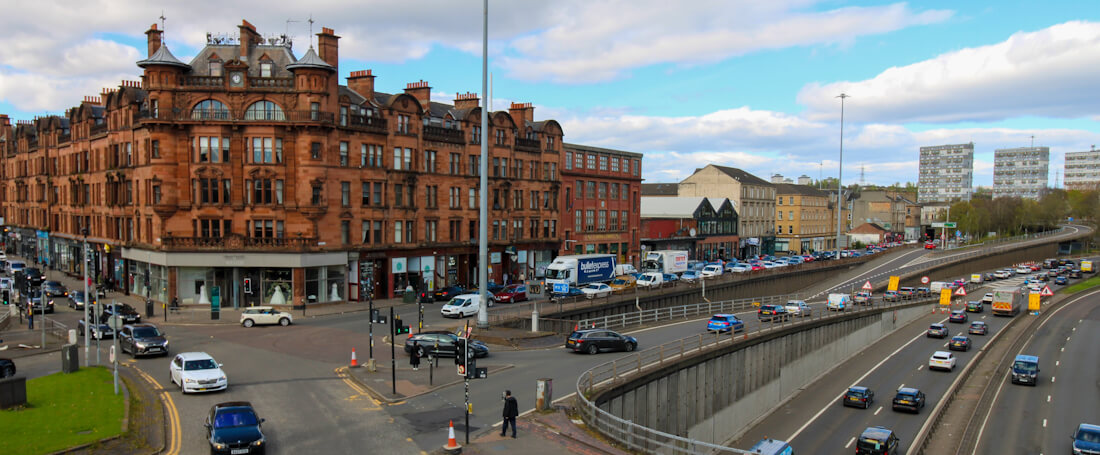
While owning a car in Glasgow is largely unnecessary, it can come in handy in rainy weather or for travelling longer distances.
It's worth noting that the City Centre is a designated Low Emission Zone (LEZ). Vehicles in this area are required to meet certain fuel efficiency standards or pay a penalty fee.
Weather safety
Be aware that driving in winter can be tricky in Glasgow, particularly on icy, rainy, or snowy days. It's best to avoid driving in these conditions, so only do so if really necessary. Winter tyres can help make driving a bit safer if you drive frequently in bad weather.
In icy conditions, authorities apply salt to roads and sidewalks to make them less slippery. Still, you'll need to give yourself ample room to brake as stopping distances can be up to 10 times the usual distance in these conditions. Black ice, which can look like water or be invisible on the road, is especially dangerous. If you find yourself skidding on ice, do not brake suddenly or try to change direction. Rather, gently steer into the skid until the car slows down.
Driver's licences
Expats from within the EU can drive in Scotland for as long as their licence is valid. Those from outside the EU can drive in Scotland on a valid licence from their home country for up to 12 months after arrival. After this, they'll need to apply for a local licence.
Useful links
Walking and cycling in Glasgow
If using public transport, walking is an almost inescapable part of travelling in Glasgow. Glasgow is a large city, and despite numerous public transport options, walking is often necessary to get to where you want to go. Travellers should always be prepared for a bit of rain, though, so it's advisable to carry around a small umbrella or rain jacket in case of sudden showers.
Glasgow has around 186 miles (300 km) of cycle lanes, and sidewalks are generally safe for cycling. The number of cyclists in the city is increasing year by year. Although Glasgow isn't quite as cycle friendly as nearby Edinburgh, there's still some good cycling infrastructure available. The city has promised a further 34 miles (54 km) of walking and cycling routes by 2032 under the Connecting Glasgow programme.
If you don't yet have your own set of wheels, try the citywide bike-hiring service, run by nextbike.