
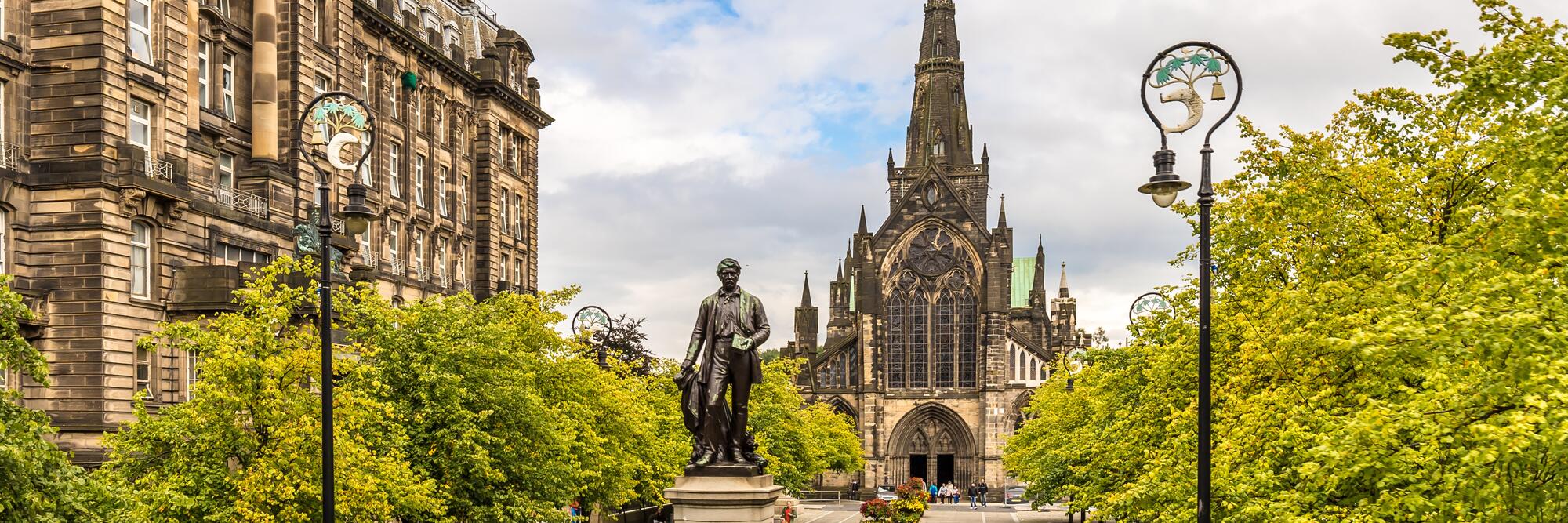
Prospective residents of Glasgow will discover that the city has a huge variety of housing options available for both renting and purchasing. Most expats opt to rent rather than buy accommodation in Glasgow, at least initially. The good news is that Glasgow tends to be an ideal choice for those looking to make the most out of a relatively tight budget.
Areas and suburbs in Glasgow
Glasgow is vast and filled with a variety of areas and suburbs, from the buzzing city centre to tree-lined neighbourhoods and everything in between.
Situated at the heart of Glasgow, Merchant City is a vibrant area with something for everyone. Here, you'll find shops, bars, and restaurants aplenty, not to mention art galleries, museums, and entertainment venues. With several train and subway stations in the area, getting around in Merchant City couldn't be easier.
Hillhead, home to the University of Glasgow, is a lively area in the West End. Great for students, this buzzing neighbourhood has independent boutiques and restaurants galore. It also has some of the city's loveliest green spaces, including Glasgow Botanic Gardens and Kelvingrove Park.
Slightly further afield is Shawlands, just south of the River Clyde. This quiet area is close to the 360-acre Pollok Country Park, a sprawling green space with plenty to see and do. A family-friendly neighbourhood, it also has some excellent schools, making it an ideal place to settle down.
Bearsdon is about 20 minutes from the city centre and is also favoured by families. Housing here is expensive but top quality, and local schools are highly rated. With Kilmardinny Loch Nature Reserve right on your doorstep, a breath of fresh air will never be far off, and quaint bakeries and cafés in the area offer respite from the Scottish rain.
Types of accommodation in Glasgow

A range of property types can be found in Glasgow. Certain types of accommodation are often associated with particular districts and neighbourhoods.
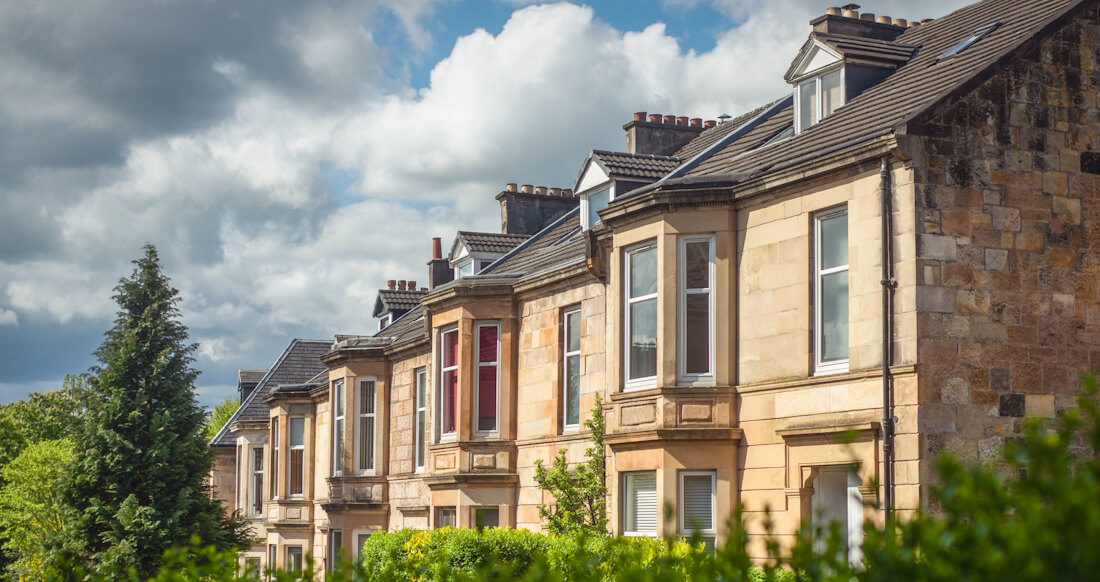
Many areas close to the city centre contain tenements. Most were built in the late 1800s or early 1900s. These multi-storey dwellings have a shared stairway entrance with multiple units on each floor. They're usually three or four storeys high. Other typical tenement features include large rooms, high ceilings, and bay windows.
More modern apartment buildings, known as flats, are interspersed throughout the city, and often make for an affordable option for newly arrived expats.
Outside the city centre, the suburbs tend to be more family oriented with more spacious housing and are typically populated by those who commute to work every day. Many of these housing estates have a cookie-cutter design serving a more functional role, while the older areas have character homes, which are typically larger and pricier.
Much of Glasgow's rental accommodation is offered fully furnished, which is a great option for those awaiting overseas shipments or starting over in their new location with no household belongings. If you prefer to bring or buy your own furniture, it's usually fairly easy to arrange for unfurnished accommodation. There are also several major furnishing stores in and around Glasgow, including IKEA.
Finding accommodation in Glasgow

The best place to start looking for accommodation in Glasgow is online, by browsing the many property portals that cover the city. Social networking sites such as Facebook can also be useful for connecting with other expats who might have recommendations on areas or information about upcoming vacancies.
Expats may want to make use of the services of a letting agent, as these professionals have extensive knowledge of the various areas and types of housing available in Glasgow. They can offer advice and guidance throughout the process of finding a home. Landlords cover the agents' fees, so prospective tenants can use their services free of charge. Relocation companies are another good option. Many providers offer house-hunting in addition to regular packing and moving services.
Useful links
Renting accommodation in Glasgow

Making an application
Once you've found your ideal home, you'll need to submit an application, along with documents proving your identity, copies of bank statements or payslips, and your previous landlord's contact details for reference checks. In some cases, a guarantor may be required. Note that while expats may be asked to show their passport for identity verification, they are not required to show proof of a 'right to rent' in Scotland – this is a requirement in England only.
If a landlord wants to do a credit check on you or your guarantor, they must obtain written permission to conduct the check and do so at their own expense.
Deposits and fees
If you don't have a UK credit history, you may be asked to pay several months of rent up front. Six months is the maximum amount allowed, but landlords can sometimes be negotiated down to three months.
The typical deposit is the equivalent of one or two months' rent, with two months being the legal maximum. When you move out, the full amount must be returned, though fees can be deducted for damages beyond normal wear and tear, unpaid rent or utilities, or cleaning bills if the home is left dirty.
Leases
There's no fixed length for a private lease in Scotland, so it's indefinite or open ended until either the landlord or tenant ends the lease. Before signing, expats should ensure they fully understand the lease agreement, including its terms and conditions.
Terminating the lease
Glasgow's rental laws are favourable to the tenant. You only need to give 28 days' notice to your landlord if you wish to move out before the lease term is up.
Useful links
Utilities in Glasgow

When budgeting, expats should ensure they're clear on what's included in the rental price and what isn't. Council tax and utilities, including electricity, gas, water, telephone, internet and cable, usually need to be paid for by the tenant.
Electricity and gas
When moving into your new home, check the electricity and gas meters and take down the numbers displayed. In most cases, the previous tenant will have ended their contract with their electricity and gas provider, leaving you to choose your own.
There's a wide range of electricity and gas providers to pick from in Glasgow. Different packages are available, so it's advisable to shop around to find a deal that suits your electricity usage habits. Some providers prioritise carbon-free electricity or have other environmentally friendly initiatives, such as buybacks for excess solar power. Scottish Power and Octopus are two widely used providers.
Solar panels are becoming more common throughout Scotland, as the government provides significant incentives for those who opt in, including grants to cover installation.
Council tax
Council tax is calculated annually and paid for in several payments spread throughout the year. The amount paid covers costs for aspects such as street lighting and road maintenance, as well as rubbish and recycling collection.
Water and sewerage
Most of the drinking water in Glasgow comes from Loch Katrine in Stirling District. Scottish Water provides water and sewerage services, and costs for these are included in the council tax bills.
Rubbish and recycling
In Glasgow, you'll be provided with a set of bins for different types of waste, including recyclables. The bins are collected regularly according to a schedule set up by the local council.
For more details, see Setting up Household Utilities in the UK.