
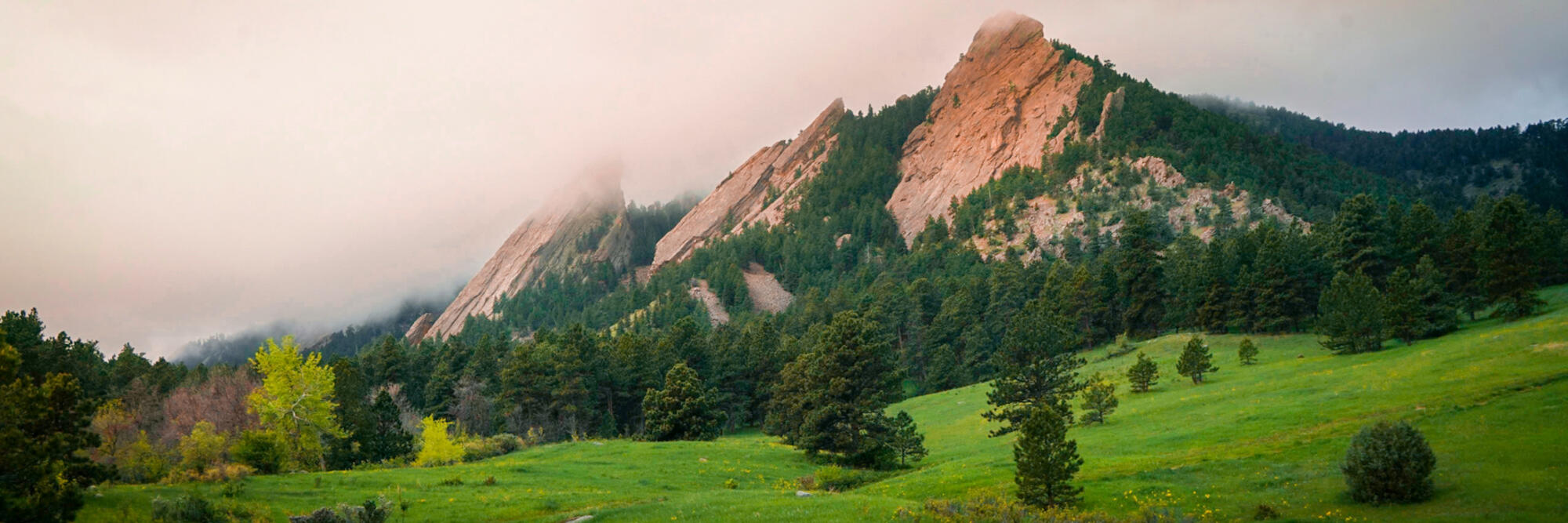
New arrivals moving to Boulder will find themselves at the edge of the Great Plains and the foothills of the Rocky Mountains. The setting is the main reason so many residents, new and seasoned alike, spend their free time outdoors. There are trails for hiking and mountain biking through the warmer months, and once the snow arrives, skiing and snowboarding are within easy reach of town.
A lot of that access comes down to the greenbelt. The city has protected more than 45,000 acres (18,000ha) of open space and mountain parks around its edges. This dates back to a 1967 vote, when Boulder became the first city in the US to tax itself to buy up open land.
Boulder is also rated one of the healthiest cities in Colorado, which bodes well for the quality of life of new residents.
Cost of living in Boulder
A high quality of life comes at a price, and the cost of living in Boulder can be a real challenge for newcomers. Prices here are higher than in the Denver metro area, which makes Boulder the most expensive city on Colorado’s Front Range. Groceries, utilities, healthcare, and dining out all come in above the national average.
The cost of both renting and buying in Boulder is high and keeps increasing. Some of this is due to the city’s design. Most new buildings in Boulder cannot exceed 55 feet (17m), and the surrounding greenbelt leaves little room for the city to expand. More people want to live in Boulder than there are homes for them, so prices stay high.
Many who work in town live in cheaper neighbouring towns instead, such as Louisville, Lafayette, Longmont, and Erie, and commute in. Boulder ranks among the most bike-friendly cities in the US, so new arrivals who cycle can cut their transport costs.
Getting around in Boulder
Getting around in Boulder without a car is realistic for most newcomers. The Regional Transportation District (RTD) runs the local and regional buses. The Flatiron Flyer bus rapid transit runs between Boulder and Denver, and the AB routes go straight to Denver International Airport. The city is trying to reduce how much residents rely on cars, but most households still own at least two vehicles.
Boulder has more than 300 miles (480km) of bike routes, and many residents cycle as their main way of getting around. Boulder BCycle, the city’s electric bike share scheme, sells short passes for occasional trips and longer memberships for regular riders. It now operates alongside Lime e-scooters under a single shared mobility programme. RTD buses carry bike racks too. At the larger stations, commuters can lock up under cover in secure Bus-then-Bike shelters.
Useful links
Healthcare in Boulder
Healthcare in Boulder is well covered. The city has a full hospital system as well as a number of neighbourhood clinics. Boulder Community Health has looked after the area for more than a century, and locals tend to turn to it first for cancer care, neurosurgery, cardiac services, and stroke treatment.
The city provides easy access to essential services, including primary care and mental health support. Boulder County is consistently ranked among the healthiest in Colorado. Good healthcare is part of the reason, and an unusually active, outdoorsy population accounts for much of the rest.
Useful links
Schools in Boulder
For families, the schools in Boulder are often the deciding factor in where to live. Many residents are highly educated and expect a lot from local schools. The Boulder Valley School District is one of the top-rated districts in the state. It runs more than 55 K–12 schools and has a student-teacher ratio of roughly 17 to 1.
Parents do need to check catchment areas when they choose where to live, since enrolment tends to depend on them. Good schools are spread across the city, and charter and private schools offer further options for families who want a different approach. One practical point for renters: every August and September, as the University of Colorado term begins, students take up much of the available rental housing, and places can be hard to find at that time of year.
Among the public options, Fairview High School gives honours students the choice between Advanced Placement and the International Baccalaureate (IB). Whittier International Elementary School, the oldest continuously operating school in Boulder, runs the IB Primary Years Programme. Several private schools also offer the IB curriculum, among them Mackintosh Academy and Boulder Country Day School. Special-needs support is strong across both public and private schools in the city.
Boulder is also home to the University of Colorado Boulder, the state’s flagship university. Naropa University, also in town, offers undergraduate and graduate liberal arts programmes and is known for its contemplative, Buddhist-inspired approach to education.
Education and Schools in Denver
Useful links
Weather in Boulder
Newcomers can expect all four seasons from the weather in Boulder. Summers are pleasantly warm, and the winter snow is good news for skiers and snowboarders.
Boulder has a semi-arid climate and gets around 300 sunny days a year. The climate is mild on the whole, but the weather can change fast, so new residents should be ready for sudden temperature swings.
January is the coldest month. Highs reach about 45°F (7°C), and lows fall to around 21°F (-6°C). July is the warmest month, when highs reach roughly 87°F (31°C). The first snow usually falls in October, and the last of the season comes in April or May. Anyone moving to Boulder from a lower altitude may experience mild altitude sickness at first, which should pass within a few days.
Working in Boulder
Working in Boulder gives newcomers access to an unusually deep job market for a city this size. The University of Colorado Boulder employs a large share of the workforce, which makes education one of the largest sectors in town. Google opened a campus here in 2018, and that gave the local tech industry a real boost.
Tourism, finance, insurance, and healthcare all employ large numbers, too. Boulder has also become a hub for aerospace, natural foods companies, outdoor industry brands, and a dense cluster of tech startups. Anyone who wants to build a professional network will find the Boulder Chamber a sensible first port of call. Plenty of people also live in Boulder and work in Denver, since the two are only about 40 minutes apart by car.
Useful links
Accommodation in Boulder
Boulder is a compact city, but house hunters will still want to think carefully about distances as they sort out accommodation here. It pays to live within easy reach of work and the school run, because traffic can build up and turn short trips into long ones.
There are plenty of different areas and suburbs in Boulder to suit newcomers of all kinds. Buyers should go in clear eyed about the cost, which is steep. Many decide it is worth it anyway, for the views of the Rockies and the small-town feel that the city has held on to.
Young professionals and singles often settle in Downtown Boulder, where low-maintenance townhouses are a short walk from Pearl Street and the Boulder Farmers Market. North Boulder, or NoBo, is a former industrial district that has been redeveloped into a startup hub, now full of cafés and apartments. Most NoBo residents are young, but it's a comfortable place for people of all ages.
Mapleton Hill suits families who want a large, historic home but still want modern conveniences close by. The neighbourhood borders downtown and is known for its stately Victorian mansions.
Chautauqua, at the foot of the Flatirons, is one of Boulder’s most sought-after addresses, and it is priced accordingly. Chautauqua Park’s trailheads are only a short walk away.
Anyone who plans to live near Boulder Creek should know that parts of the city are at real risk of flooding. The destructive floods of 2013 made that clear. It is worth checking a property’s flood zone before signing anything.
Lifestyle in Boulder
For most residents, lifestyle in Boulder means time outdoors. Lakes and forests are close at hand, the Rocky Mountains rise right behind the city, and people pack their calendars with hiking, skiing, snowboarding, swimming, and kayaking.
In downtown Boulder, Pearl Street Mall is a favourite with shoppers and gourmands alike. The pedestrianised stretch is chock-full of independent shops and restaurants. In summer, street performers add to the buzz.
The food is a real strength for a town this size. Diners can pick from Indian and Nepalese kitchens, Mediterranean tables, farm-to-table bistros, and classic surf-and-turf spots.
Newcomers with an interest in history or art have plenty to do. The University of Colorado Museum of Natural History is well worth a visit, and it holds millions of specimens across anthropology, entomology, and the natural sciences. Palaeontology buffs will find the fossil halls under the same roof, rather than in a separate museum. Performing arts fans can almost always find a show at the Dairy Arts Center or the Boulder Theater.
Boulder is a college town, and it has the nightlife to match. There are dive bars, student haunts, live music venues, and more polished lounges, and most of the best-known spots are on The Hill, next to the University of Colorado. The city also has a strong craft beer culture, and tasting rooms are dotted across town.