

- Download our Moving to London Guide (PDF)
You can find a vast range of accommodation in London. Options to suit almost any budget, lifestyle, and background abound. There are neighbourhoods in London that are perfect for young professionals, expat families, international students, or high-flying business executives.
The UK capital is a highly cosmopolitan city, and you will have the opportunity to mix with people from all over the globe. Thanks to the city's excellent public transport, getting around won’t be too much of a problem, although some areas are better serviced than others. Many expats benefit from their employer assisting them in finding a suitable rental property and navigating all of the associated red tape, often through a local relocation company.
Areas and suburbs in London
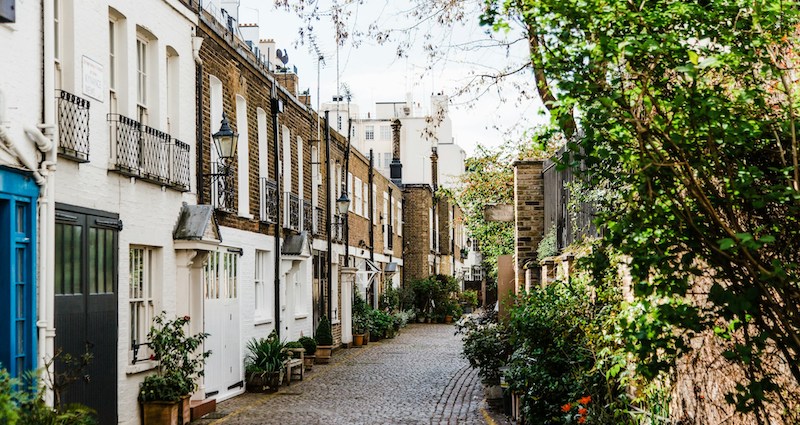
London has a huge variety of neighbourhoods to choose from, and there's something for everyone.
West London is home to some of the most prestigious areas in the city. Chelsea, Knightsbridge, and South Kensington are highly sought after. The proximity to top international schools and the French Consulate makes these areas particularly popular with French families. With high-end boutiques on High Street Kensington and beautiful green spaces like Kensington Gardens, this part of London combines luxury with convenience.
North London is home to Hampstead, a leafy suburb known for its village atmosphere and proximity to excellent schools. It’s a favourite among families looking for larger properties and a tranquil environment. With its bohemian vibe and vibrant nightlife, Camden attracts young professionals and creatives. The area is famous for its music scene and bustling markets.
East London, particularly Shoreditch and Hoxton, has become a hub for young professionals in the media and tech industries. Known for its trendy bars, eclectic restaurants, and street art, this area has a distinct urban feel. Leyton and Stratford are more affordable options and have benefited from the Olympic regeneration, providing excellent transport links and amenities.
South London includes diverse areas like Wimbledon and Clapham. Wimbledon offers upscale properties in addition to more affordable housing options, making it popular among families and professionals. Clapham is known for its lively social scene and beautiful parks, attracting young professionals and families. The excellent transport links from Clapham Junction make commuting easy.
Types of accommodation in London
There's a large variety of property types available in London. The kind of home you choose will depend on the location you want to live in, your family's needs and, of course, your budget. Generally, homes further from the city centre are more affordable and spacious than inner-city accommodation.
London is undeniably an expensive city, so many new arrivals decide to live in a shared house or flat to cut costs. Sharing with strangers may be daunting, but it can be an excellent way to meet new people. It's worth checking out a few properties and also meeting prospective housemates. Flatshares are usually furnished properties with shared kitchens and living areas. There are thousands of listings on property websites.
Property in London can broadly be divided into three main types: flats, terraced housing, and detached housing.
Flats or apartments
Flats, or apartments, are either part of a large modern development or a conversion, typically an old building or house separated into flats. Mansion blocks are apartment buildings built in the Victorian or Edwardian era. They are primarily found in more prestigious areas of London and usually have ornate red-brick facades and lateral flats with period features and high ceilings.
Many apartments in central London are in converted Georgian terraced houses; these grand stucco-fronted buildings are highly desirable but often lack the soundproofing you'll find in mansion blocks.
Terraced houses
Most London suburbs have many streets with rows of two-storey terraced Georgian or Victorian houses. In more suburban areas, the terraced housing is more likely to be Edwardian in style, with mock Tudor cladding and timbers at the top of the house.
Mews houses are now some of the most desirable properties in London. They were built as stables and servant quarters, tucked away behind large Georgian houses, but most have now been converted into quaint two- or three-bedroom homes.
Detached houses
Detached properties can be old or new, but are usually located outside of central London. They typically offer more space and bedrooms, and a garden. Freestanding houses in desirable areas can be extremely expensive.
Finding accommodation in London
Finding suitable accommodation in London is relatively straightforward, but the rental market is competitive and fast-moving. We recommend some research before arriving. In particular, it’s crucial to shortlist suitable areas and suburbs in London that suit your needs and budget.
Most property searches begin on one of the online property portals, such as Rightmove or Zoopla. Once this initial research is done, you will find it helpful to contact a local real estate agent familiar with the particular area or suburb of London you want to live in. Agents often have access to properties that are yet to make it onto public listings, too. Making use of your relocation company is another excellent option. Many providers offer house-hunting in addition to regular moving services.
Useful links
Renting accommodation in London

After deciding on the most suitable part of London and the type of property you want to rent, you'll likely research properties online and then contact local estate agents to set up viewings. Once you find a suitable property and an agreement has been made with the landlord, the estate agent will draw up the contract.
Before the contract can be signed, the estate agent will need to check references and do some background checks. The deposit and the first month’s rent will be taken before the start of the tenancy.
Making an application
The landlord or estate agent will need to see some paperwork before a lease is signed. This may include collecting references from your employer or a previous landlord and seeing proof of identification (usually a passport). If you are coming from abroad, you will need to produce a copy of your UK visa and documents allowing your stay in the UK.
You may also be asked for proof of salary or funds, including payslips, a contract of employment, and recent bank statements. We recommend checking which documents will be needed in advance and making necessary copies to avoid any delays.
Leases
Once you have found a property you like, you'll need to sign a Periodic Assured Tenancy Agreement (PAT). This agreement gives you the legal right to live on a property continuously, until either party gives notice to end the agreement.
All reputable estate agents will use a standard contract that protects both the landlord and tenant. All the same, it’s essential to read the agreement carefully and raise any queries with the estate agent before signing it.
Deposits and fees
When renting a property in London, you'll need to put down a deposit of either five or six months' rent, depending on the annual rental amount. A landlord or letting agent should put the deposit in a Tenancy Deposit Protection (TDP) scheme rather than paying it into their own bank account. If you are in a dispute with your landlord, the deposit will be protected in the TDP scheme until the issue is resolved.
The landlord may deduct expenses from the deposit to cover costs such as repairing any damage to the property, paying for professional cleaning, removing anything you left behind, or replacing lost keys. Landlords must return the deposit within ten days of both parties agreeing on how much they will get back.
Terminating the lease
You can end a PAT lease agreement by giving at least two months' notice. Landlords need to give at least two to four months' notice, depending on the reason for ending the agreement.
Useful links
Utilities in London
Utilities, such as electricity, gas, water, and council tax, are usually not included in the quoted rental price and will be an extra expense. For more guidance on paying council tax, visit the official council websites for your particular London borough. Most services are available online, including making payments and setting up a direct debit.
Before moving in, confirm with the real estate agent or landlord that all utilities are set up, switched on, and ready to be used come move-in day.
The previous tenant or owner should have given the final meter readings to the utility companies. However, new tenants are encouraged to take the gas and electricity readings when moving in. This will ensure that you are not charged for usage by previous occupants.
Different utility companies offer a variety of rates and tariffs. It’s easy to change suppliers in the UK, and it’s usually possible to save money by shopping around and switching tariffs or suppliers. Price comparison websites make it easy to compare suppliers.
Electricity and gas
London's gas and electricity market is deregulated, meaning you can choose from a wide range of providers. Popular suppliers include British Gas, Octopus Energy, and E.ON Next, many of which offer renewable energy options. Prices vary depending on usage and the tariff scheme, so it’s generally a good idea to compare deals through price‑comparison sites before choosing a provider.
Water
Your water supplier in London varies by postcode, so you'll need to register with your local provider. Water is billed every six months if the property has a water meter and annually for unmetered homes (fees are loosely based on the property value).
Bins and recycling
Typically, bins are collected weekly, and there are separate containers for cardboard, glass and plastic. Each London borough has a different system for rubbish collection and recycling. The official council websites for each borough will give details on bin-collection days and what each bin is used for.
Parking
Every London borough now operates a residents' parking scheme, where the council taxpayers can apply for a parking permit that allows them to park in the borough or within an area within the borough. The cost of a permit for one car is usually between GBP 100 and GBP 250 per year. Most councils also allow residents to buy visitor permits.
Setting up Household Utilities in the UK